
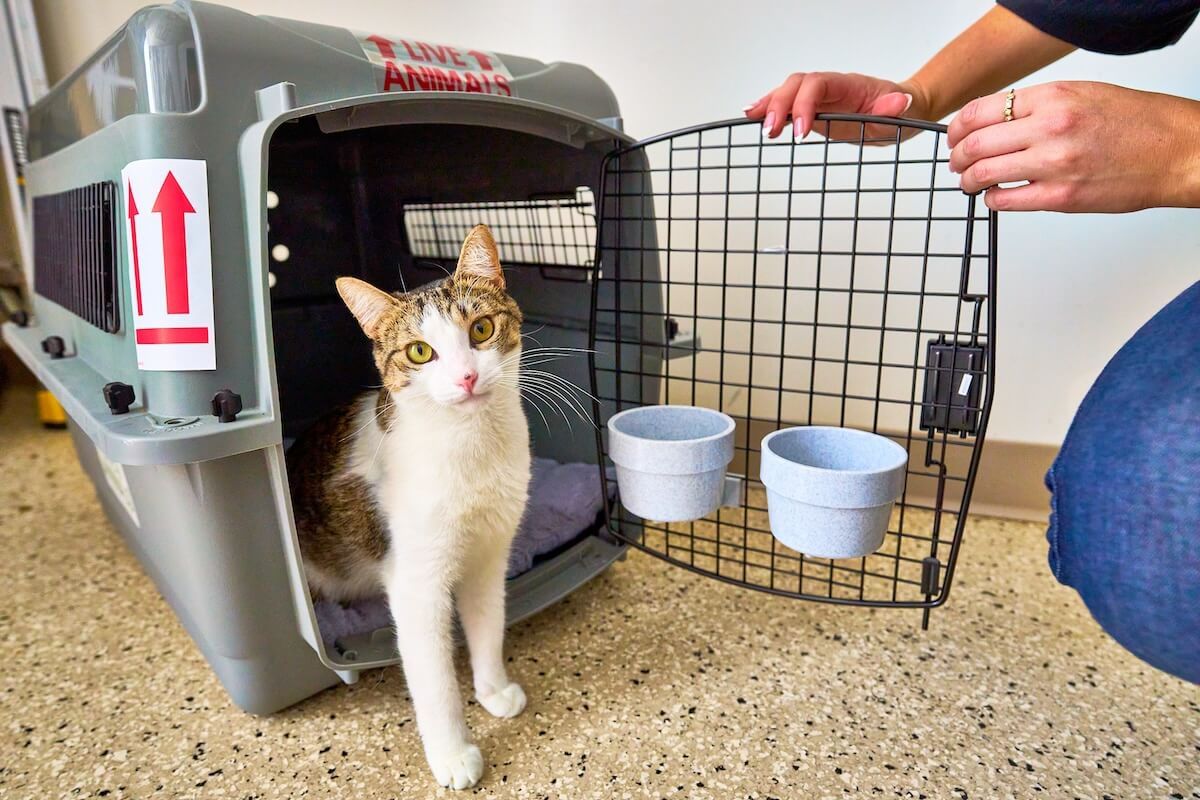
How to Pick the Right Crate for Pet Travel
Choosing the right pet crate or carrier for air travel is essential for your pet’s safety, comfort, and to meet airline requirements. Using the wrong size or type of crate can result in denied boarding, unnecessary stress for your pet, or even safety risks during the flight.
The good news is that many airline-approved crates are built to meet IATA standards, ensuring they comply with regulations while providing a secure, comfortable space for your pet.
This guide covers everything you need to know about travel crates. You’ll learn the differences between cargo and in-cabin travel, how to measure your pet for the correct size, and tips to help them stay calm and comfortable, even if they’ve never flown before.
Choosing the Right Dog Crate
Whether you’re planning domestic or international travel, airlines have specific requirements for dogs traveling in cargo. It’s important to choose options that meet airline-approved dog crate sizes, namely that your dog’s crate is big enough to accommodate them comfortably.
Measuring Your Dog for a Crate
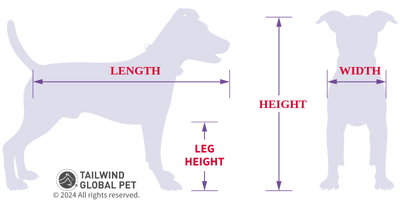
Before deciding on the crate size for dogs flying in cargo, you’ll need to measure your dog. Have information on the following before you shop:
- A: The length of your dog from the tip of their nose to the base of their tail.
- B: The height of your dog from the ground to their elbow joint.
- C: The width across your dog’s shoulders or the widest point, whichever is greater.
- D: The height of your dog in natural standing position from the top of the head or ear tip to the floor, whichever is higher.
From there, use our Crate Calculator or reference the International Air Transport Association (IATA) guidance for determining crate size for live animals:
- Container length: Combine the length of the dog (A) with half the height of your dog from the ground to their elbow (B).
- Container width: Multiply the width of your dog (C) by 2.
- Container height: Use the total of your dog’s height in a natural standing position (D) plus their bedding.
Need help figuring out which size crate you need? Check out our Crate Calculator.
Cargo Regulations
Here are a few key requirements for dog crates:
- Crates must have leak-proof bottoms, meaning they should either be lined with absorbent materials or designed to contain spills.
- Food and water bowls should be securely attached inside and accessible without opening the crate.
- Light blankets, beds, or crate pads up to about 3 inches thick, as well as a soft piece of clothing with your scent, are allowed for comfort.
- Toys, bones, or anything that could pose a choking hazard are not permitted.
- If your crate has wheels, they must be removed before air travel.
- The top of the crate should be labeled with your pet’s name and your contact details.
- Airlines may require additional paperwork attached to the crate, and all pets must have up-to-date health certificates at check-in.
For large dogs or breeds with special requirements, we provide custom-built CR82 that offer extra reinforcement beyond standard rigid plastic kennels. They’re designed for pets that may pose a security or escape risk during transport.
In-Cabin Guidelines
If you have a small dog flying in-cabin, shop for a soft-sided carrier instead of a hard crate. Most airlines limit pet carriers to about 20 inches in length, and some domestic routes may allow only up to 18 inches. Weight limits, including the dog and carrier, are typically 15-20 pounds.
Here are a few more things to keep in mind:
- Make sure the carrier fits comfortably under the seat in front of you.
- Your dog must be able to stand up and turn around inside the carrier, and most airlines will ask you to demonstrate this at check-in.
- In-cabin carriers typically count toward your carry-on allowance.
- Most airlines allow only one pet per ticket, though a few may allow 2. You may need to purchase a second seat if bringing more than one dog.
Comfort and Anxiety Management
Choosing a pet crate for air travel with ample space is a great start, but you should also line it with soft bedding for extra comfort. A familiar piece of clothing can help soothe anxious pets.
Your dog’s crate or carrier shouldn’t be a new environment. Crate training well in advance is essential to help them get acclimated to spending time inside. Make it a positive space with treats, praise, and sessions that gradually increase in length.
For very anxious pets, we’ve seen success with ThunderShirts, pheromone collars or sprays, and natural supplements that include anxiety-reducing ingredients. Talk to your vet about introducing new strategies, especially if your pet is already on medications.
Sedatives are not recommended during travel, as they can pose health risks at altitude. Instead, focus on creating a safe, comfortable, and familiar space to help reduce your dog’s anxiety.
Extra Considerations
If you’re traveling with 2 dogs, most airlines require them to be in separate crates. Only very small or young dogs, typically under 20 pounds and less than 6 months old, may share a larger crate, but airline rules vary, so always double-check before booking.
Snub-nosed breeds, such as bulldogs, pugs, or Boston terriers, have anatomically restricted airways, and many airlines limit or do not allow them to fly. If you need to travel with one of these breeds, a professional pet shipper can help you understand your options.
The IATA recommends that crates for snub-nosed breeds that are able to fly be about 10% larger than standard dimensions. Even for other breeds, it’s wise to size up if your dog is near the upper limit of the correct crate size.
Finally, be aware of age restrictions when thinking about crate requirements for flying. Most airlines require dogs to be at least 8 weeks old for pet transport, and some carriers may have additional rules for very young or older pets. Planning ahead is important not only to your pet’s safety, but also to ensure they’re able to fly.
Need support shipping your pet within the U.S.? We can help.
Selecting the Correct Cat Kennel
It’s more common for cats to travel in-cabin with a pet owner. Although it generally costs less to do so, booking your cat as manifest cargo may be safer and more efficient. Some airlines also only allow pets in cargo. We’ll include details for both scenarios.
Measuring Your Cat for a Kennel
If your cat is flying in cargo, you’ll need to purchase an appropriately sized, IATA-approved cat kennel or cat crate. Start by measuring your cat. Use the exact guidance we provided for dogs flying in cargo. Don’t include your cat’s tail in any of your pet’s measurements.
From there, follow the same guidelines to choose your crate’s length, width, and height. Some travelers like to size up to give their cats extra room.
Cargo Regulations
Your cat’s crate should provide enough space to stand, turn around, and lie down comfortably. Size up if your cat is near the upper limit. Here are a few more specifics:
- Crates must have leak-proof bottoms, lined with absorbent material or designed to contain spills.
- Food and water bowls should be attached securely inside but accessible from the outside.
- An absorbent liner, soft bedding, or a piece of clothing with your scent are allowed inside. Toys, litter boxes, or anything that could pose a choking hazard are not.
- Label the top of the crate with your cat’s name and your contact details. Airlines may also require additional paperwork attached to the crate. Assume all pets need up-to-date health certificates at check-in.
In-Cabin Guidelines
In-cabin cat carriers should fit under the seat in front of you. Most airlines limit pet carriers to about 20 inches. Some domestic carriers may allow only up to 18 inches. Weight limits, including the cat and carrier, are typically 15-20 pounds. Here are a few more things to keep in mind:
- Carriers must be soft-sided, well-ventilated, and have secure zippers to prevent escape.
- Leak-proof bottoms with padding or absorbent materials help prevent accidents. Expandable backpack carriers are popular, but always confirm airline approval.
- Cats must be able to stand up and turn around in the carrier.
- In-cabin carriers count toward your carry-on allowance, and most airlines allow only one pet per ticket, though a few may allow 2.
Comfort and Anxiety Management
Whether your cat is flying in the cabin with you or in the cargo hold, they should be acclimated to their crate or carrier well before their flight. Cats may need more time than dogs to learn how to enter willingly.
If they’re new to travel, gradually introduce their crate or carrier. Use treats and positive praise. Place familiar bedding inside and let them explore it at home before their trip. Treat the crate or carrier as a resting area.
If it’s a collapsible carrier or crate you can take apart, you can also start with the bottom of the carrier before adding the top and door.
For anxious cats, we’ve seen success with our cat clients adding familiar smells or calming pheromone sprays inside travel crates. Avoid sedatives to keep your pet safe. Your vet can help with additional strategies for a stress-free travel day.
Additional Tips for Successful Pet Travel
Traveling with a pet can be stressful, but a little preparation goes a long way. Follow these tips to help ensure a smooth, safe, and comfortable journey:
- Ensure your pet is healthy enough to fly by scheduling a vet check-up well in advance.
- Confirm that vaccinations and overall wellness are up to date.
- Be aware that pets with respiratory conditions or certain health issues may not be fit for air travel.
- Give very anxious pets extra time to prepare for travel to reduce stress on the day of the flight.
- Avoid feeding your pet for 4-6 hours before the flight to prevent nausea and minimize potty breaks.
- Provide plenty of exercise and fresh air the day before travel to help your pet expend energy.
- Keep your pet well-hydrated in the hours leading up to the flight.
- Stay calm yourself, as animals can sense your nervous energy and may become anxious.
Read Next: The Ultimate Packing Checklist for Flying With Your Dog
FAQs
Make Pet Travel Stress-Free
Choosing the right crate is just one piece of your pet’s travel journey. Navigating the logistics of pet travel, especially with a more complicated itinerary, can feel like a huge burden. We can help.
At Tailwind, we handle everything from making sure you have an IATA-compliant crate to prepping your pet’s paperwork and advising you on calming an anxious pet. We’ve got the experience and expertise to make travel for you and your pet as stress-free as possible.
Ready to get started? Each pet relocation situation is different, so to get an idea of the costs involved, fill out a quote request.